Obscure Japanese Film #248Toru Shimamura This Nikkatsu production was based on the autobiographical novel of the same name by one of Japan’s major writers, Yasushi Inoue (1907-91). The book was translated into English by Jean Oda Moy in 1991, but Inoue’s sequel, Zoku Shirobamba, has been neither filmed nor translated, and the fact that Nikkatsu never made the sequel suggests that this film was not especially profitable. The story concerns Inoue’s own childhood in Izu in the early Taisho period (1912-26) when Inoue was around seven years old, and the title refers to the white aphids that the children would try to catch in the autumn. Izumi Ashikawa Inoue’s alter ego is Kosaku (played here by Toru [later Miki] Shimamura), whose rural upbringing is unusual in that his parents, though living, are absent, and he’s brought up by his late great-great uncle’s mistress, known as Granny Onui (Tanie Kitabayashi). He’s all she’s got, so she spoils him, and he’s very attached to her as a result. The only other person he really likes is Sakiko (Izumi Ashikawa), whom he calls his elder sister although she’s actually his aunt. Unfortunately, she looks down on Onui and there’s no love lost between the two women. Sakiko lives in the ‘Upper House’ nearby with Kosaku’s other relations, but he feels uncomfortable there and avoids them. Kosaku gets the highest grades in his year at school and his family has a higher social status than his classmates’, so he feels different to the other boys and great things are expected of him. Jacket of the novel in English translation Reading the novel in translation a while ago I was reminded of the films of Keisuke Kinoshita and wondered if the book had ever been filmed; looking it up, I found that not only had it been, but that the screenwriter was none other than Keisuke Kinoshita himself. However, it’s directed not by him, but by Eisuke Takizawa, who seems to have been Nikkatsu’s director of choice for their more prestigious literary adaptations during this period (not a genre they’re widely remembered for). Jukichi Uno I had high hopes for this film but, although its superficially faithful, one of the strengths of the book is its lack of sentimentality, and it was disappointing to see the story sentimentalised as it has been here, especially in regard to composer Takanobu Saito’s clichéd use of mandolin and harp. There’s also been an overall softening of tone – to give a couple of examples, in the book, the schoolteachers think nothing of dishing out corporal punishment, and Sakiko is an arrogant snob, while here the teachers (one of whom is played by a twinkly-eyed Jukichi Uno in old man make-up) are far more genial and Sakiko – perhaps partly due to the casting of popular star Ishikawa – is a much gentler character. Tanie Kitabayashi Talking of casting, I felt that a lack of imagination was evident in hiring 51-year-old character actress Tanie Kitabayashi to do her old granny act yet again when Sachiko Murase would have been a far better fit for the complex character described by Inoue. Well-made though it is, ultimately I couldn’t help feeling that the film would have had more depth if it had been cast and scored differently and directed by Kinoshita or Miyoji Ieki instead of Takizawa. A note on the title:The title can be written as Shirobamba or Shirobanba in English; the character ん is usually written as ‘n’ in translation, but when pronounced before a ‘b’, it’s natural to close the mouth more fully, so it comes out sounding more like an ‘m’. This is also the reason why both Tetsuro Tanba and Tetsuro Tamba can be considered correct. Thanks to A.K. DVD at Amazon Japan (no English subtitles) If you enjoy this blog, feel free to Buy Me a Coffee

Feb 22, 2026 • Subscribe
More like this

The Phantom Goblin (まぼろし天狗, Nobuo Nakagawa, 1962)
Hashizo Okawa takes on dual roles as earnest brothers separated at birth determined to “clean out evil in Edo” in Nobuo Nakagawa’s jidaigeki drama

Is ばんごはん (Dinner) Outdated? #learnjapanese
Learn Japanese with Me - https://bit.ly/4drmyU2

Hiroshima (ひろしま, Hideo Sekigawa, 1953)
During the post-war occupation of Japan which lasted until 1952, the censorship regulations which replaced those of the militarist era perhaps ironically made it more or less impossible…

The Workhorse and the Bigmouth ばしゃ馬さんとビッグマウス (2013) Director: Keisuke Yoshida
“The Workhorse and the Bigmouth” is one of Keisuke Yoshida’s most palatable drama/comedies as it follows two characters trying to make it in the movies and offers a…


The Eleventh Hour (どたんば, Tomu Uchida, 1957)
The problematic working practices of a post-war coal mine are thrown into stark relief when five men are trapped underground during a collapse in Tomu Uchida’s tense rescue…

VTuber Canan (ばかなんす): From Hikikomori to Influencer
Canan revealed her face in an incident back in August 2020. Learn more about your favorite VTuber and see what she looks like IRL!
いろいろ December 2023
I ran out of space over at the newsletter this month, so I thought I’d share the いろいろ section on the blog instead. Podcast link at the bottom!…
![Featured image for Transform! へんしんっ! Director: Tomoya Ishida [Yamagata International Documentary Film Festival 2021]](https://cdn.aniblogtracker.com/live/20211013/1634122355.23141.49501.jpg)
Transform! へんしんっ! Director: Tomoya Ishida [Yamagata International Documentary Film Festival 2021]
Transform! へんしんっ! Director: Tomoya Ishida [Yamagata International Documentary Film Festival 2021]

I Go Gaga, Welcome Home Mom (ぼけますから、よろしくお願いします。~おかえりお母さん~, Naoko Nobutomo, 2022)
In a followup to her hugely popular documentary, Naoko Nobutomo follows her parents as her mother’s health continues to decline.
LGBTQ Manga: Stop!! Hibarikun! Complete Edition, Volume 1 (ストップ!!ひばりくん! コンプリート・エディション)
Some series are famous because they create a whole new chapter of fandom. Others spearhead a new style of art or story telling. But there are some series…
てへぺろ [Tehepero](๑≧౪≦)てへぺろ
Hi everyone. Oh no, I have left my blog for too long. I even forgot to write in English! Does anyone help me with my terrible English? My…


konna koto mo arou ka to こんなこともあろうかと
What konna koto mo arou ka to こんなこともあろうかと means in Japanese, with examples.
Mabataki (まばたき)
Mabataki (まばたき) is a collection of short stories by Battan, creator of Run Away With Me, Girl. This is another manga I picked up while in Japan (I…

The Island Closest to Heaven (天国にいちばん近い島, Nobuhiko Obayashi, 1984)
A young woman comes to a new understanding of herself while travelling abroad in Nobuhiko Obayashi’s laidback kadokawa idol movie.

Let Me Hear It Barefoot (裸足で鳴らしてみせろ, Riho Kudo, 2021)
Two alienated young men struggle to identify their feelings while searching for escape from moribund small-town Japan in Riho Kudo’s indie drama.

Your Japanese is Good if You Understand This No.4 なら たら と ば んだったら であれば であるなら
Learn Japanese with Me - https://bit.ly/4drmyU2

Criminal Woman: Killing Melody (前科おんな殺し節, Atsushi Mihori, 1973)
Former cellmates band together to take out a duplicitous yakuza in Atsushi Mihori’s expertly crafted slice of pinky violence

Get ’em All (「みな殺しの歌」より 拳銃よさらば, Eizo Sugawa, 1960)
A recently released young man is forced onto a nihilistic path of meaningless violence when his bank robber brother is killed in a hit and run in Eizo…

Girl with the Fire Banner (唄祭りかんざし纏, Kinnosuke Fukada, 1958)
Hibari Misora puts out the fires of the Bakumatsu in another musical jidaigeki adventure.

Destiny’s Son (斬る, Kenji Misumi, 1962)
A wandering son finds himself in the middle of intrigue on learning the sad secrets of his birth in Kenji Misumi’s elliptical, elegiac tale of death and the…
Osho /王将 (‘King of shogi’, 1962)
Obscure Japanese Film #106 Rentaro Mikuni This Toei production stars Rentaro Mikuni as Miyoshi Sakata (1870-1946), an illiterate sandal-...

Shinobi no Mono: Band of Assassins (1962)
Yamamoto expertly utilizes the game of disguises, traps, gadgets, concealed passages, hidden stairs, and trapdoors, to offer an allegorical tale of the post-war subject’s conundrum

Tokyo Bay (東京湾, Yoshitaro Nomura, 1962)
Two old war buddies find themselves on opposite sides of the law in Nomura’s sprawling journey through the post-war underworld

Sanjuro (椿三十郎, Akira Kurosawa, 1962)
The cynical drifter finds himself offering fatherly advice to idealistic but hot-headed samurai youth in Akira Kurosawa’s Yojimbo followup.

The Whale God (鯨神, Tokuzo Tanaka, 1962)
A young man wrestles with the destructive legacy of vengeance in a traditional fishing village on the verge of eclipse in Tokuzo Tanaka’s parabolic drama.

Anime Before Astro Boy (Japanese Animation 1946 - 1962)
Iconic anime movies and TV shows released before the original Astro Boy in 1963. These include TOEI's first movies like Panda and the Magic Serpent and Alakazam the…

The Desperate (どろ犬, Takaharu Saeki, 1964)
A bruiser cop railing against the system is pulled towards the dark side in Takaharu Saeki’s icy noir.
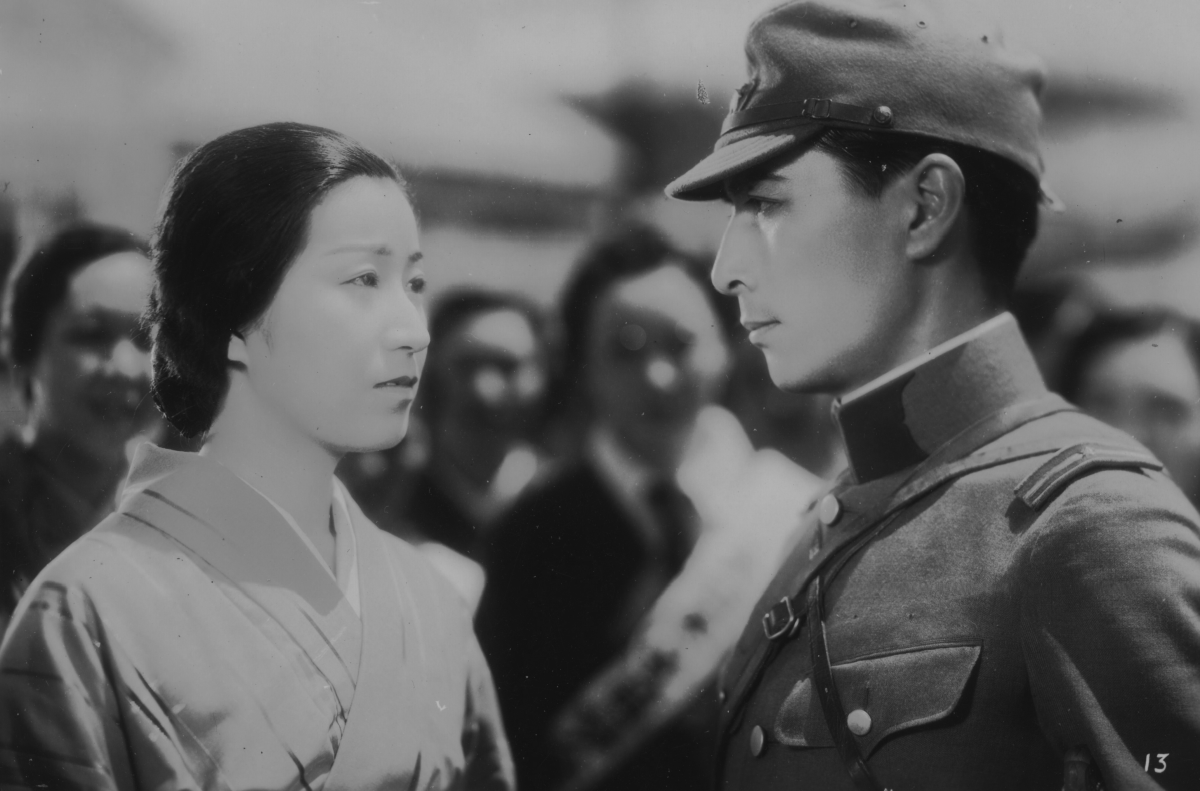
Sincerity (まごころ, Mikio Naruse, 1939)
When the daughter of a poor family leapfrogs that of a rich one to be named top of the class, it exposes a series of hypocrisies and contradictions…

Hanasaku Iroha 花咲くいろは
Ohana, a Tokyo high school girl, who had been living alone with her single mom has no choice but to relocate to her grandmother’s inn when her mom…


Enma-san (えんまさん, Tomoki Suzuki, 2022)
A young woman with the ability to see people’s true thoughts thanks to a magic mirror becomes consumed with hatred for the world’s duplicity but finds unexpected connection…

Funuke Show Some Love, You Losers! (腑抜けども、悲しみの愛を見せろ, Daihachi Yoshida, 2007)
The petty resentments of a dysfunctional family quickly escalate when a failed actress returns home in Daihachi Yoshida’s dark farce

A Woman’s Place (女の座, Mikio Naruse, 1962)
The young women of post-war Japan struggle to define themselves in a changing society in Mikio Naruse’s uncharacteristically hopeful family drama

A Wanderer’s Notebook (放浪記, Mikio Naruse, 1962)
A determined young woman seeks a way out of poverty in Mikio Naruse’s biopic of author Fumiko Hayashi.
![Featured image for King Kong vs. Godzilla (1962) review [The Godzilla Project]](https://cdn.aniblogtracker.com/live/20221222/1671692410.49612.81479.png)
King Kong vs. Godzilla (1962) review [The Godzilla Project]
A splendid Godzilla narrative that delivers thrilling kaiju action while elegantly exploring the impact of the rise of capitalism and consumerism on Japanese society and the traumatic truth…
Itoshii Koishi, Volume 3 (いとしこいし)
Hina is a high school senior with a secret -she’s dating an older woman. She wants very much to share that secret with her friends, she just needs…

Amalock (あまろっく, Kazuhiro Nakamura, 2024)
A resentful middle-aged woman’s perspective begins to change when her father suddenly marries a much younger woman in Kazuhiro Nakamura’s lighthearted dramedy.

iyashikei 癒し系
A blog about Japanese words in anime and manga, with romaji and explanations.

Do Japanese Names Typically Have ちゃん、さん etc? #learnjapanese
Learn Japanese with Me - https://bit.ly/4drmyU2

This Year’s Love (今年の恋, Keisuke Kinoshita, 1962)
The intense friendship between a pair of underachieving boys sparks romance between their mismatched siblings in Keisuke Kinoshita’s charming romantic comedy.

Tengu Priest (お坊主天狗, Yasushi Sasaki, 1962)
Disparate denizens of Edo are united in one thing in Yasushi Sasaki’s light hearted jidaigeki, Tengu Priest (お坊主天狗, Obozu tengu), revenge. Like many jidaigeki, what they really want…

Travels of Hibari and Chiemi: The Tumultuous Journey (1962) review
“This film remains, after all these years, a highly enjoyable narrative that succeeds to please the spectator with heart-warming light-heartedness, comical action, and beautiful musical momen…

In Search of Mother (瞼の母, Tai Kato, 1962)
A lonely yakuza longs to reconnect with mainstream society by finding the mother who was forced to abandon him in Tai Kato’s hugely moving jidaigeki.
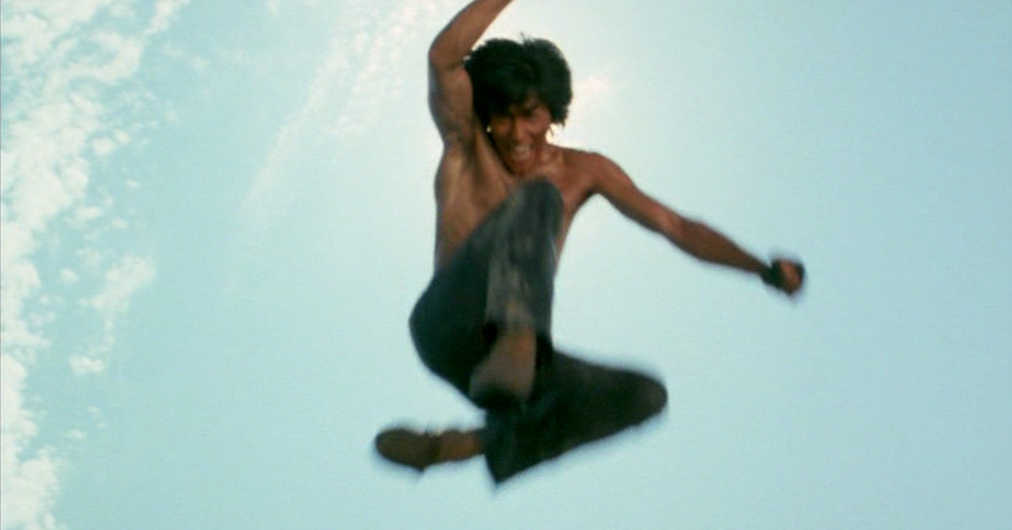
Roaring Fire (吼えろ鉄拳, Norifumi Suzuki, 1981)
If Chiba’s karate films and the Sister Streetfighter series had been influenced by Shaw Brother’s kung fu films, Roaring Fire (吼えろ鉄拳, Hoero Tekken) is an homage to contemporary…

Passing Fancy (出来ごころ, Yasujiro Ozu, 1933)
A feckless widowed father faces twin crises when he falls for a young woman and his falls ill in Yasujiro Ozu’s depression-era drama.

"Can I Say したい Instead of ほしい?" #learnjapanese
Learn Japanese with Me - https://bit.ly/4drmyU2

The Real Thing (本気のしるし, Koji Fukada, 2020)
A bored salaryman begins to chase the real thing after saving a distressed woman from an oncoming train in Fukada’s beautifully elliptical drama

Being Two Isn’t Easy (私は二歳, Kon Ichikawa, 1962)
A wise child critiques the post-war society in Kon Ichikawa’s charmingly surreal familial drama.
Four Sisters / 山麓 / Sanroku (‘The Foot of the Mountain’, 1962)
Obscure Japanese Film #167 Isuzu Yamada Yoshiko Mita Sonny Chiba Modern-day Tokyo. Masako (Yoshiko Mita) is a young woman who wants to...

Thorns Of Beauty (恋のいばら, Hideo Jojo, 2023)
A jilted ex and the current girlfriend team up against a no good guy with compromising photos of them both in Hideo Jojo’s playful drama.